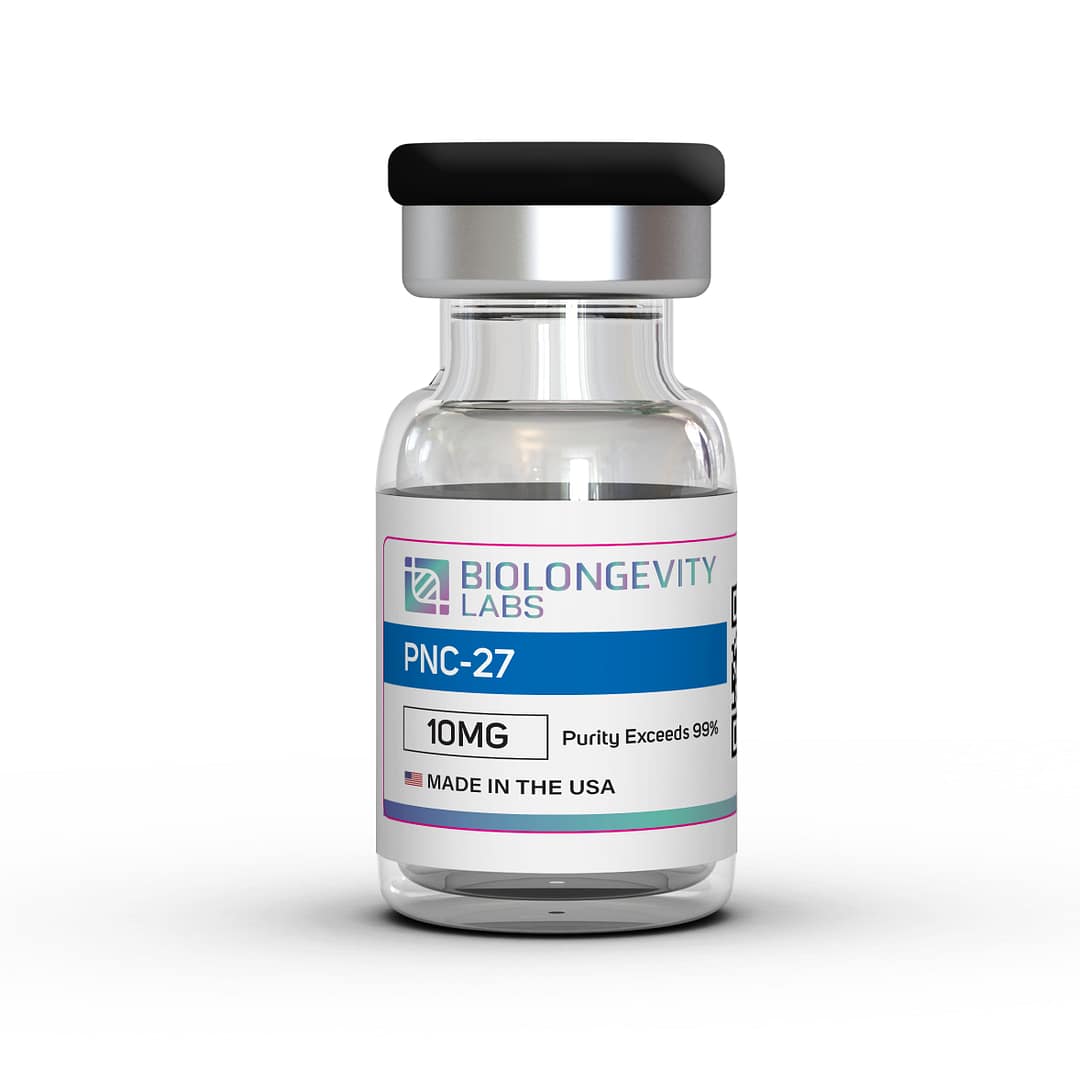
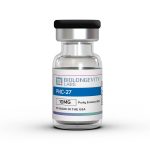
PNC-27 (10mg)
$160.97
PNC-27 is a membrane-active peptide for in vitro anticancer research applications that selectively kills cancer cells by binding to HDM-2 on their membranes and inducing necrosis through pore formation.
PNC-27 Product Description
PNC-27 is a synthetic peptide designed to selectively kill cancer cells by targeting a protein called HDM-2 (also known as MDM2) found on the membranes of many cancer cells. It works by binding to membrane-bound HDM-2, forming pores in the cancer cell membrane, and causing rapid cell death through necrosis, while sparing normal cells.
PNC-27 is derived from the p53 protein’s HDM-2 binding domain (amino acids 12-26) and is linked to a membrane-penetrating sequence, allowing it to enter and act on cancer cell membranes. The peptide binds specifically to HDM-2 present on the surface of cancer cells, not normal cells. This binding leads to the formation of transmembrane pores, disrupting the cell membrane and causing cell lysis and necrosis, independent of the p53 pathway.
Peptide Information
| Property | Value |
|---|---|
| Peptide Sequence | Pro-Pro-Leu-Ser-Gln-Glu-Thr-Phe-Ser-Asp-Leu-Trp-Lys-Leu-Leu-Lys-Lys-Trp-Lys-Met-Arg-Arg-Asn-Gln-Phe-Trp-Val-Lys-Val-Gln-Arg-Gly |
| Molecular Formula | C188H293N53O44S |
| Molecular Weight | 4029.2 g/mol |
| CAS Number | 1159861-00-3 |
| Synonyms | H-PPLSQETFSDLWKLLKKWKMRRNQFWVKVQRG-OH, PPLSQETFSDLWKLLKKWKMRRNQFWVKVQRG-acid, H-Pro-Pro-Leu-Ser-Gln-Glu-Thr-Phe-Ser-Asp-Leu-Trp-Lys-Leu-Leu-Lys-Lys-Trp-Lys-Met-Arg-Arg-Asn-Gln-Phe-Trp-Val-Lys-Val-Gln-Arg-Gly-OH, A6, Paralit |
PNC-27 Peptide Structure

Source: PubChem
Lyophilized Peptides:
These peptides are freeze-dried, a process that not only extends shelf life but also preserves the purity and integrity of the peptides during storage. We do not use any fillers in this process.
Related products
BPC 157 Peptide (10mg)
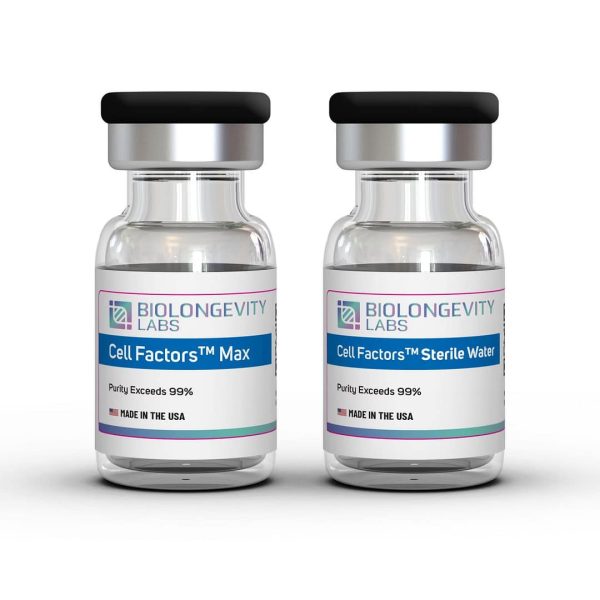
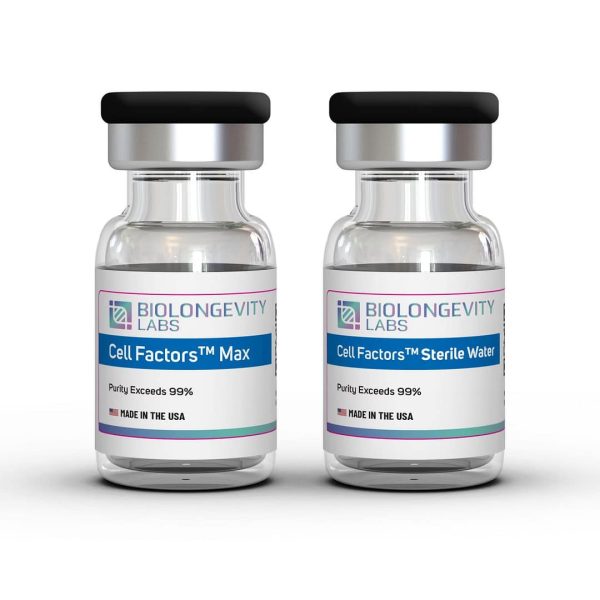
Cell Factors™
Cell Factors™ is a purified blend of natural signaling messengers derived from early placental cells, designed to support healthy cellular communication and environmental balance.
By helping cells “talk” to each other more effectively, it allows researchers to study how cellular signaling influences repair, regeneration, and overall function.
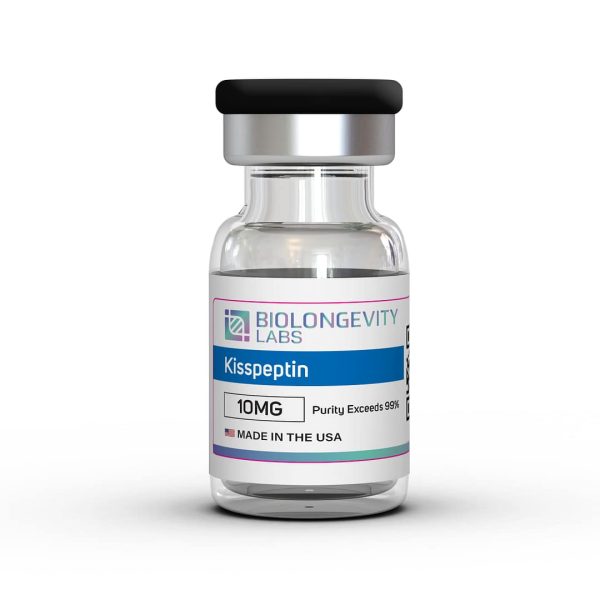
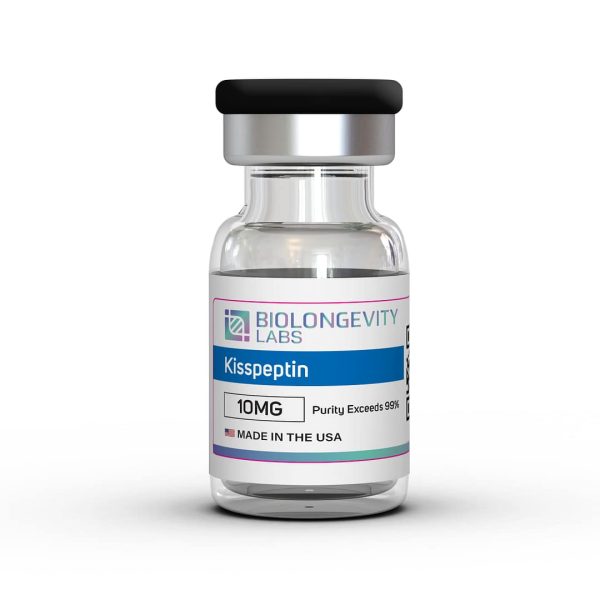
Kisspeptin-10 (10mg)
N-Acetyl Semax Amidate (20mg)
N-acetyl Semax is a synthetic heptapeptide derived from the adrenocorticotropic hormone (ACTH) fragment ACTH(4-7), modified with an N-terminal acetyl group and a C-terminal Pro-Gly-Pro extension. This structural adaptation enhances its stability against enzymatic degradation. N-acetyl Semax interacts with melanocortin receptors (MC₄ and MC₅), modulating pathways linked to cognitive function, stress response, and neuroprotection.
NAD+ Peptide (500mg)