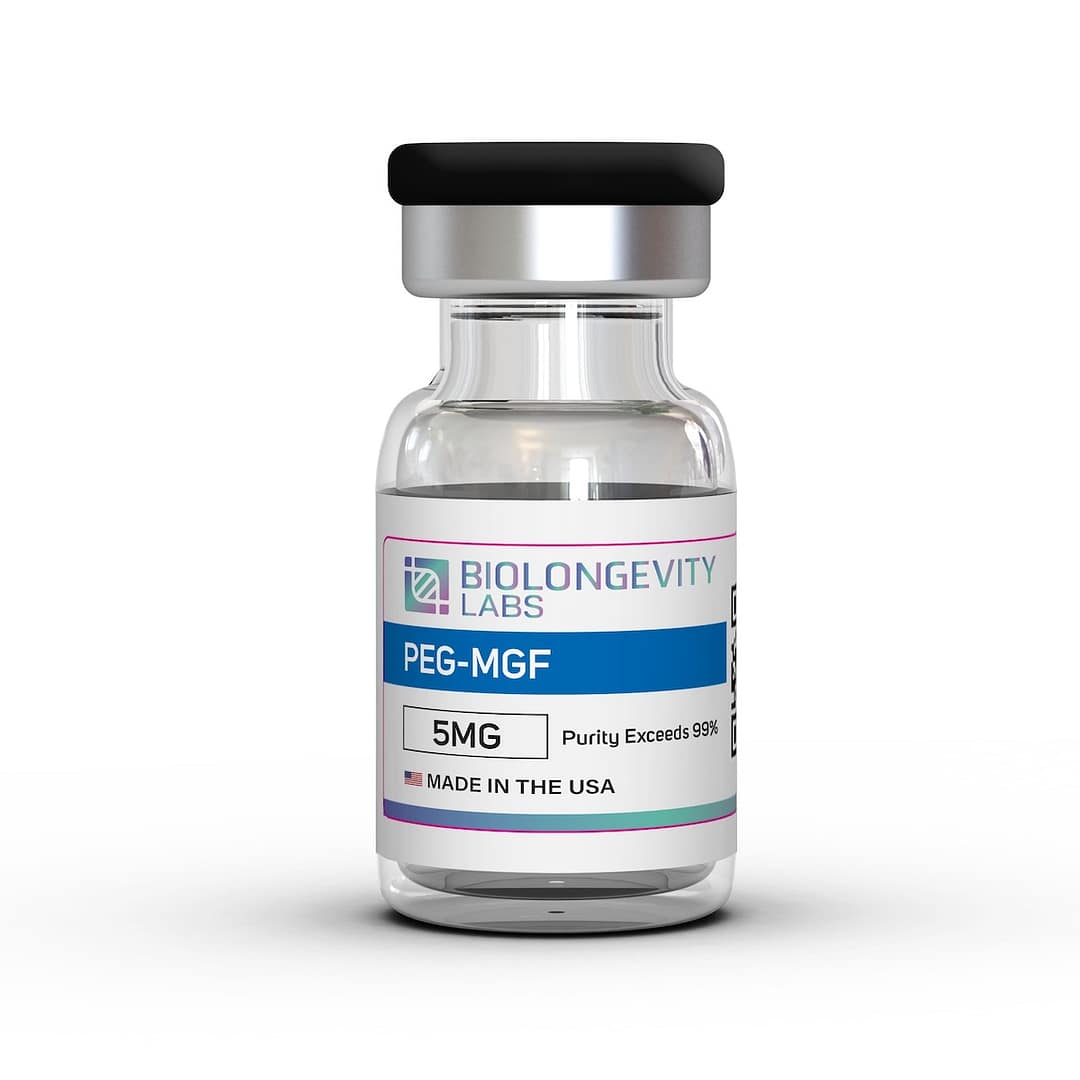
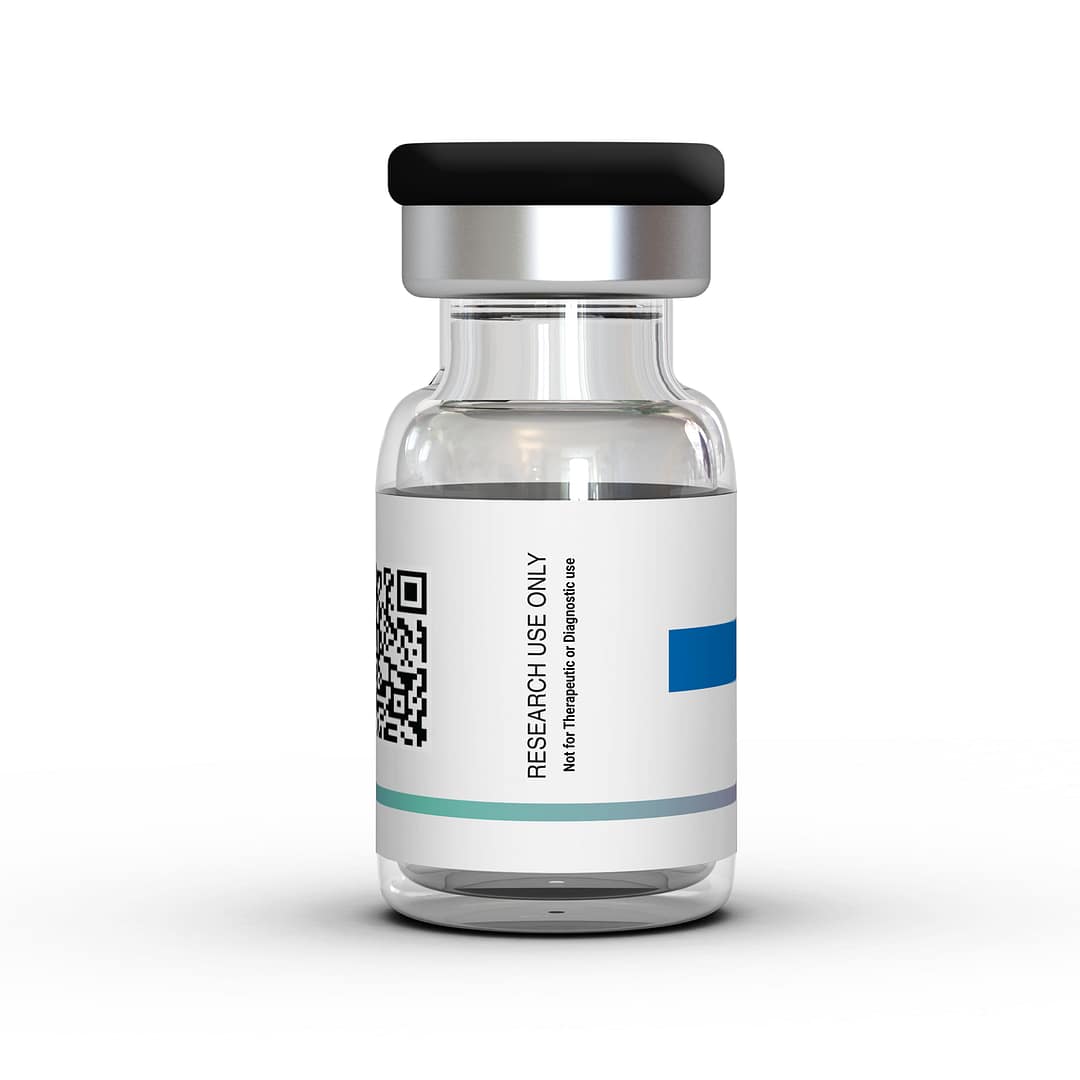
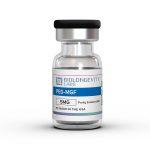
PEG-MGF (5mg)
$70.97
PEG-MGF is a long-acting research peptide derived from MGF (Mechano Growth Factor), a splice variant of IGF-1, which is produced locally in muscle tissue in response to stress or damage to activate satellite cells for repair and hypertrophy.
PEG-MGF Product Description
PEG MGF (Pegylated Mechano Growth Factor) is a synthetic, modified form of MGF, which is a split variant of Insulin-like Growth Factor-1 (IGF-1). Through a process called pegylation, a polyethylene glycol (PEG) molecule is attached to the MGF peptide, significantly enhancing its stability for research use.
This peptide preferentially targets recently stressed or damaged muscle cell tissue, making it particularly suited for laboratory studies investigating muscle growth, repair and recovery.
Peptide Information
| Property | Value |
|---|---|
| Peptide Sequence | PEG-Tyr-Gln-Pro-Pro-Ser-Thr-Asn-Lys-Asn-Thr-Lys-Ser-Gln-Arg-Arg-Lys-Gly-Ser-Thr-Phe-Glu-Glu-Arg-Lys |
| Molecular Formula | C121H200N42O39 |
| Molecular Weight | 2900 g/mol |
| CAS Number | 108174-48-7 |
| PubChem CID | 178101669 |
| Synonyms | IGF-1 Ec E-peptide, MGF-E, Pegylated MGF, PEG-MGF-Ct24E, PEG Myotrophin |
Lyophilized Peptides:
These peptides are freeze-dried, a process that not only extends shelf life but also preserves the purity and integrity of the peptides during storage. We do not use any fillers in this process.
Related products
BPC 157 Peptide (10mg)
Cell Factors™
Cell Factors™ is a purified blend of natural signaling messengers derived from early placental cells, designed to support healthy cellular communication and environmental balance.
By helping cells “talk” to each other more effectively, it allows researchers to study how cellular signaling influences repair, regeneration, and overall function.
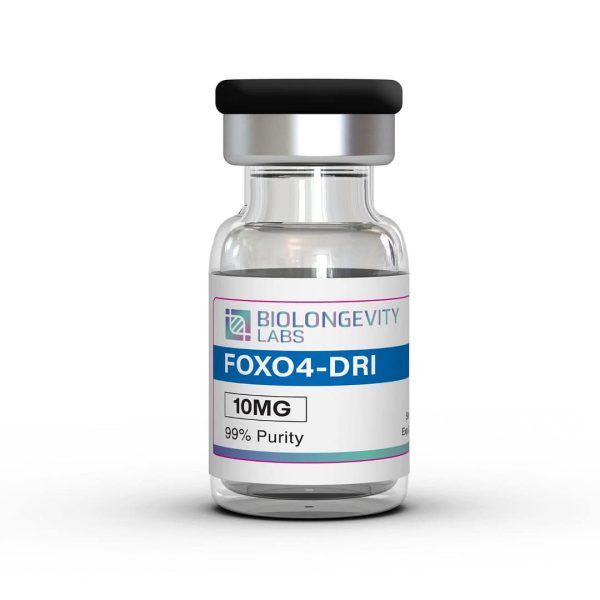
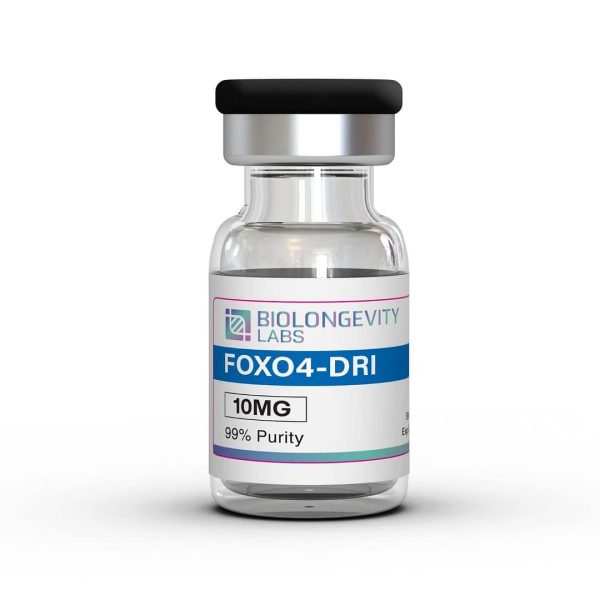
FOXO4-DRI (10 mg)
FOXO4-DRI is a synthetic peptide designed to selectively induce apoptosis in senescent cells, which are cells that have stopped dividing but remain metabolically active. These cells contribute to aging and various age-related diseases through their pro-inflammatory secretions, known as the senescence-associated secretory phenotype (SASP).
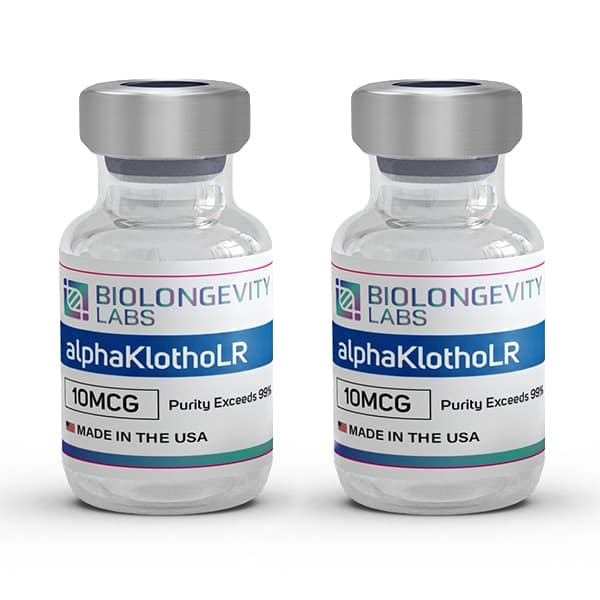
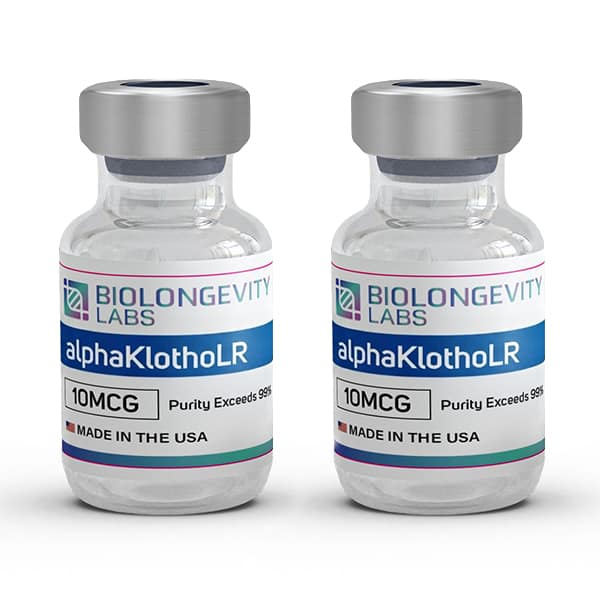
Klotho (alphaKlothoLR) (20mcg)
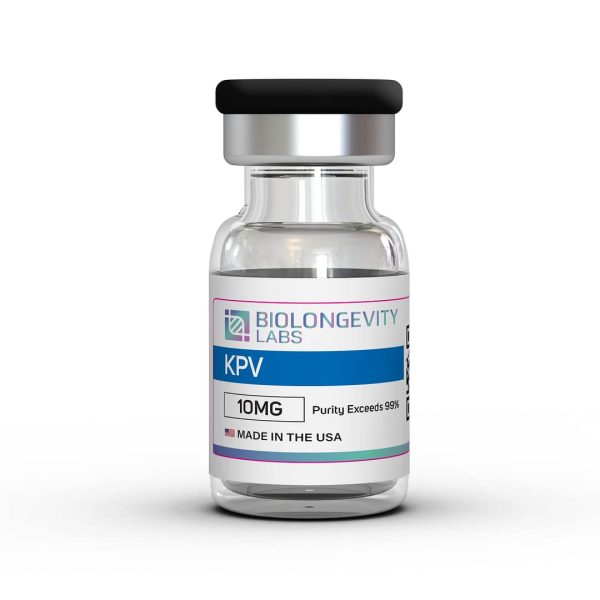
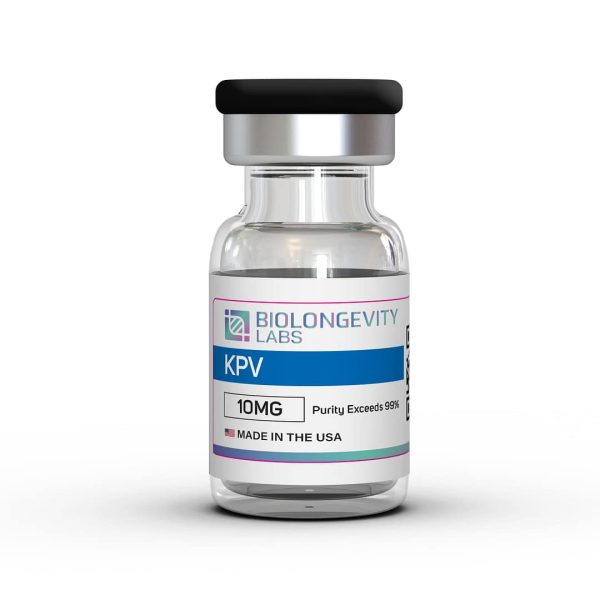
KPV Peptide (10mg)